


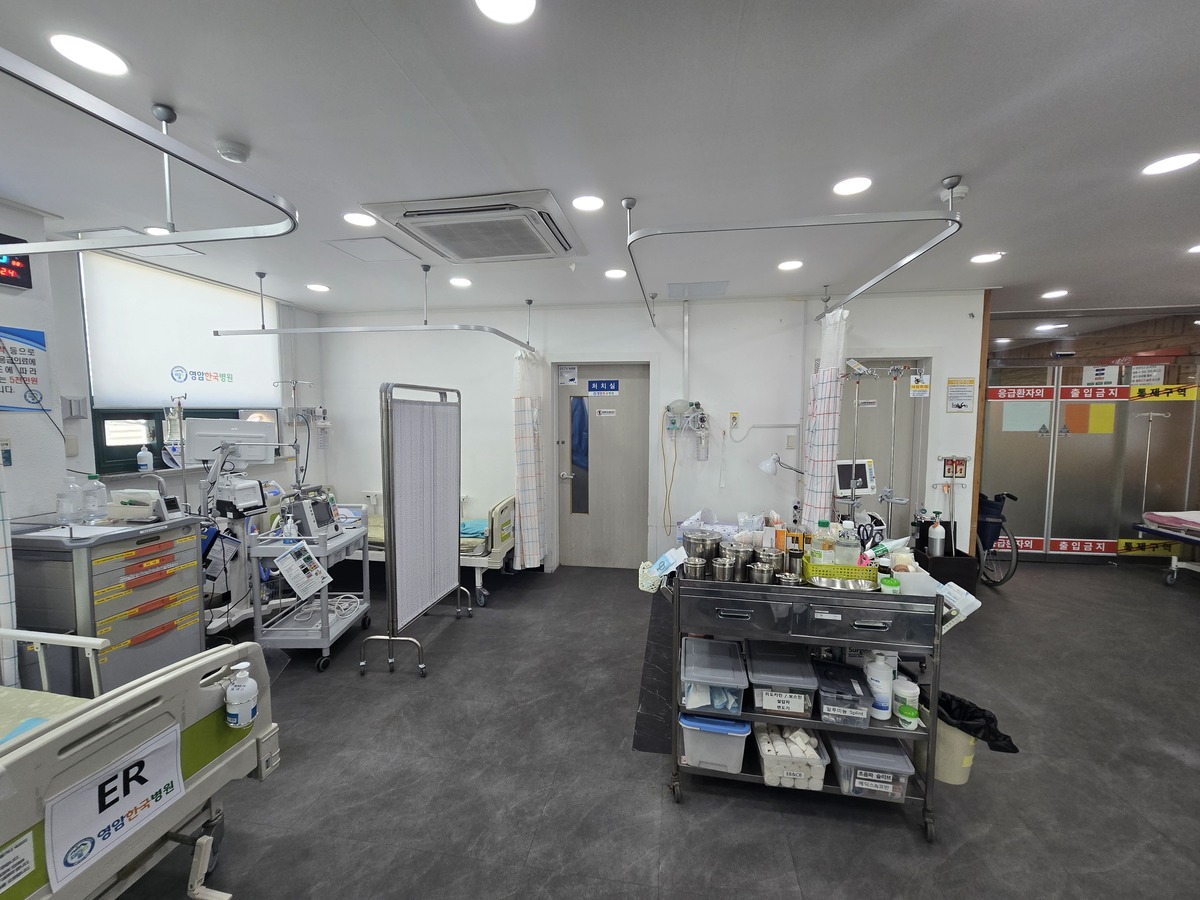
Yeongam Korean Hospital, located in Yeongam, Jeollanam-do, is attracting attention by quickly diagnosing patients with severe emergency diseases, protecting the lives of patients through close cooperation with higher-level hospitals, and emergency helicopter transport.
According to Yeongam Korean Hospital on the 25th, Park Hyun-soo (54), head of Yeongam 119 Safety Center, visited the emergency room of Yeongam Korean Hospital complaining of sudden chest pain around 10 a.m. on the 13th. While checking the patient’s symptoms and conducting detailed treatment, the medical staff discovered an aortic dissection lesion at the hospital.
Aortic dissection is a fatal emergency disease that occurs when the lining of the aorta tears. If diagnosis and treatment are delayed, it can be life-threatening, so quick judgment, transportation, and specialized treatment are needed.
Yeongam Korean Hospital quickly assessed the severity of the patient’s condition and decided that all higher-level hospitals were needed immediately. Emergency helicopter evacuation was linked to Gangnam Severance Hospital in Seoul. During this process, the hospital director explained the patient’s current condition and the risk of aortic dissection to the transport paramedics, and emphasized the importance of continuous monitoring and blood pressure control to prevent blood pressure from rising rapidly during transport. Necessary measures were taken to ensure safe and stable transfer while specifically conveying the principles and precautions for medication adjustment according to changes in the patient’s condition.
The patient was discharged in good health after receiving specialized treatment at Gangnam Severance Hospital.
Mr. Park’s case is considered a representative example of emergency medical cooperation in which the local hospital’s initial diagnostic capabilities, the tertiary hospital’s specialized treatment system, and the emergency helicopter transport system worked organically to save the patient’s life. In the case of severe cardiovascular emergencies, securing golden time determines the possibility of survival. It is assessed that Yeongam Korean Hospital’s quick and accurate initial response and the hospital director’s appropriate pre-transfer measures played a significant role in the patient’s recovery.
In April of last year, Yeongam Korean Hospital examined a patient brought to the emergency room after a traffic accident and found that he had cerebral hemorrhage. The patient quickly took emergency surgery at a hospital in Gwangju. This patient refused to be taken to the hospital after the car accident, saying he was not injured, but he could not remember the circumstances of the accident and was swayed once. The police, who sensed something strange, persuaded him to take him to the emergency room at Yeongam Korea Hospital and received treatment.
The patient could have faced a dangerous situation due to the high fatality rate if left unattended, but his precious life was saved thanks to the emergency treatment and prompt transport provided by the doctor on night duty at Yeongam Korea Hospital.
An official at Yeongam Korea Hospital said, “The most important thing for emergency patients is accurate initial judgment and prompt connection,” and added, “We will continue to strengthen our emergency medical response system as a reliable regional base hospital that protects the lives and safety of local residents.”
This case showed that, even in medically underserved areas, the lives of severe emergency patients can be saved if rapid emergency response from local hospitals and a cooperation system between higher-level hospitals are established.
Yeongam Korean Hospital, which resumed operations as an emergency medical institution in the Yeongam region in April 2021, is playing its role as a local emergency medical institution, with 5,187 patients using the emergency room and emergency patients visiting 119 ambulances last year.
Copyright ⓒ Segye Ilbo. Unauthorized reproduction and redistribution prohibited.
Leave a Reply