


As the trend cycle in the food industry is accelerating, the trend of certain menus spreading rapidly through social media and then quickly shifting attention to other menus is recurring.
As the trend of food being consumed and replaced as a type of ‘content’ beyond a simple meal becomes more noticeable, the fatigue of consumers who have to keep up with this trend and the burden of raw material supply on small business owners are increasing.
According to the ‘Dining Consumption Pattern Survey’ conducted by the Ministry of Agriculture, Food and Rural Affairs and the Korea Agro-Fisheries and Food Trade Corporation on the 2nd, the tendency to reselect previously tried and satisfied menus has strengthened in the past year, while the proportion of people trying new menus has relatively decreased. This means that the consumption pattern of repeating proven choices rather than following trends is becoming clearer.
Accordingly, the consumption standard is being reorganized to focus on ‘ready-core’, which seeks to reduce the possibility of failure, rather than simply ‘cost-effectiveness’ or ‘premium’. In the food and restaurant industry, there is a continuing movement to strengthen product competitiveness by focusing on menus that can be consumed on a daily basis rather than short-term hot topics.
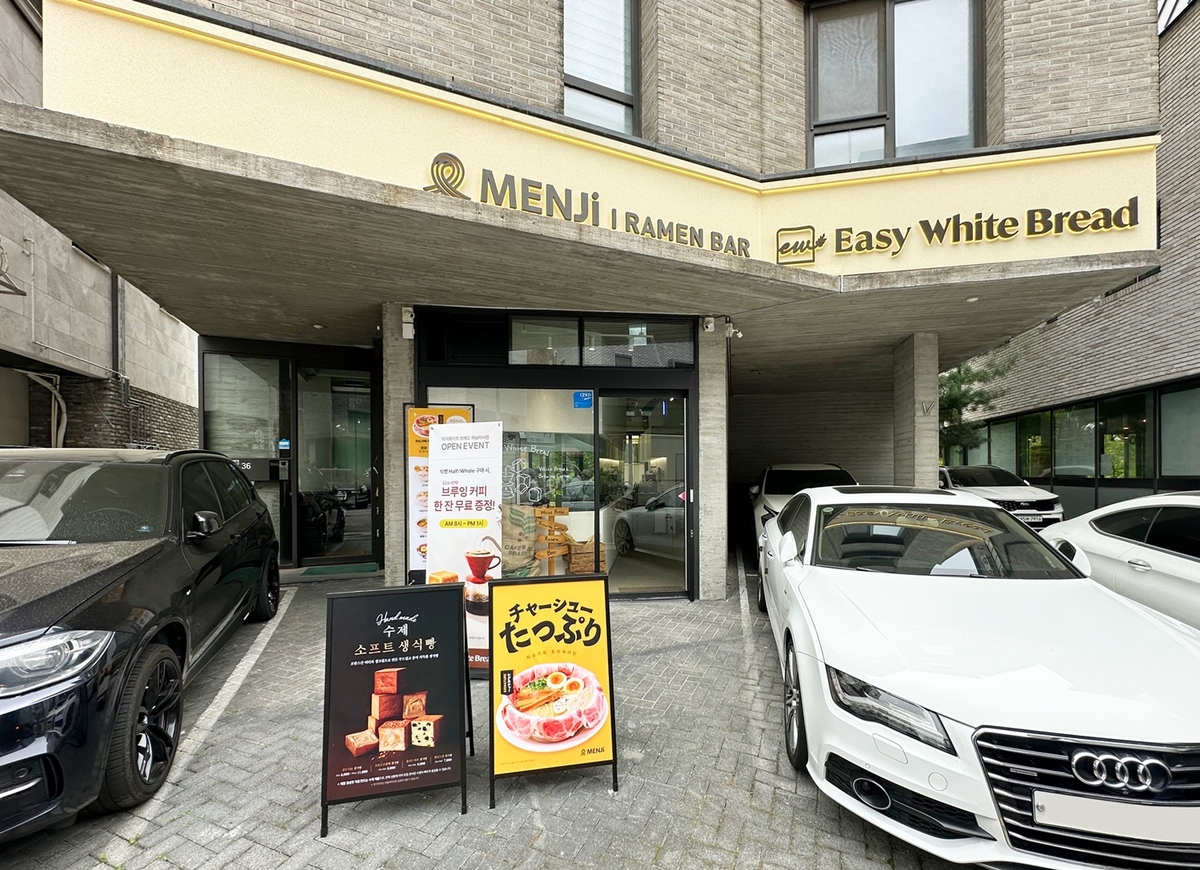
BonIF’s raw bread specialty brand ‘Easy White Bread’ is building long-term competitiveness by promoting ‘raw bread’, which is constantly consumed, as its signature menu item. The menu is designed to take into account the synergy with ‘Easy Brewing Coffee,’ a specialty brewing coffee franchise, and is structured to connect the demand for enjoying bread and coffee together with daily visits.
Easy White Bread differentiates itself in raw materials and processes, focusing on raw bread. The flavor was enhanced by using European Union-certified AOP (Appellation d’origine protégée) French butter, and the water temperature was precisely controlled during the kneading process to achieve a moist texture. The strategy of focusing on the basics has worked, and since opening, the company has recorded an average daily sales of about 2 million won, continuing a stable trend.
In line with this trend, the company began expansion by opening ‘Hanam Misa Branch’ in Misa Riverside City, Hanam last April. It is a family-oriented commercial district where more than 30,000 households reside, and the location naturally leads to the floating population visiting the park and waterfront. With the opening, ‘Butter Brulee French Toast’ was introduced as a standalone menu, further enhancing the quality of the menu.
Kyochon Chicken, which celebrates its 35th anniversary this year, has built its brand identity around representative sauces such as soy sauce, red, and honey. As trust in the taste that has been maintained for decades grows, it is attracting attention again in the consumer trend seeking ‘proven menus’.
Recently, the company expanded its strategy to expand customer contact points while maintaining the existing taste. In collaboration with Nongshim, the store experience was expanded to include snacks by launching ‘Potato Chip Kyochon Soy Sauce Kin Flavor’. By reinterpreting familiar tastes in a different form, consumption contact points have been brought into daily life.
Mom’s Touch, a local burger brand, has been expanding its presence in the global brand-centered market with its steady-seller ‘Cy Burger’. Building a cost-effective brand image based on reasonable prices and stable taste, the number of stores exceeded 1,400 and ranked first in the industry.
Cy Burger has been a representative menu item for over 20 years and has become a brand symbol. Recently, based on this, the company has continued to expand its derivative lineup, including chef collaborations and seasonal limited menus, to expand its consumption contact points. The analysis is that the strategy of expanding proven menus rather than creating new menus is working.
Amid rapidly changing trends, consumer selection criteria are gradually shifting to ‘sustainability’ and ‘repurchase experience’. This means that menus that can be consumed repeatedly in daily life, rather than short-term hot topics, are changing into a structure that determines competitiveness.
An industry official said, “In a market environment of increased uncertainty, the trend of focusing demand on proven tastes will become more evident.” He added, “In the future, the restaurant market is likely to be led by steady-selling menus that have accumulated consumer trust rather than short-term fads.”
Copyright ⓒ Segye Ilbo. Unauthorized reproduction and redistribution prohibited.
Leave a Reply