


Changed at ‘Camp David’ due to bad weather
U.S. media pays attention to important national security discussions
Iran contacts mediation country… willingness to negotiate
Partial restoration of blocked overseas internet networks
Kazakh emerges as export site for enriched uranium
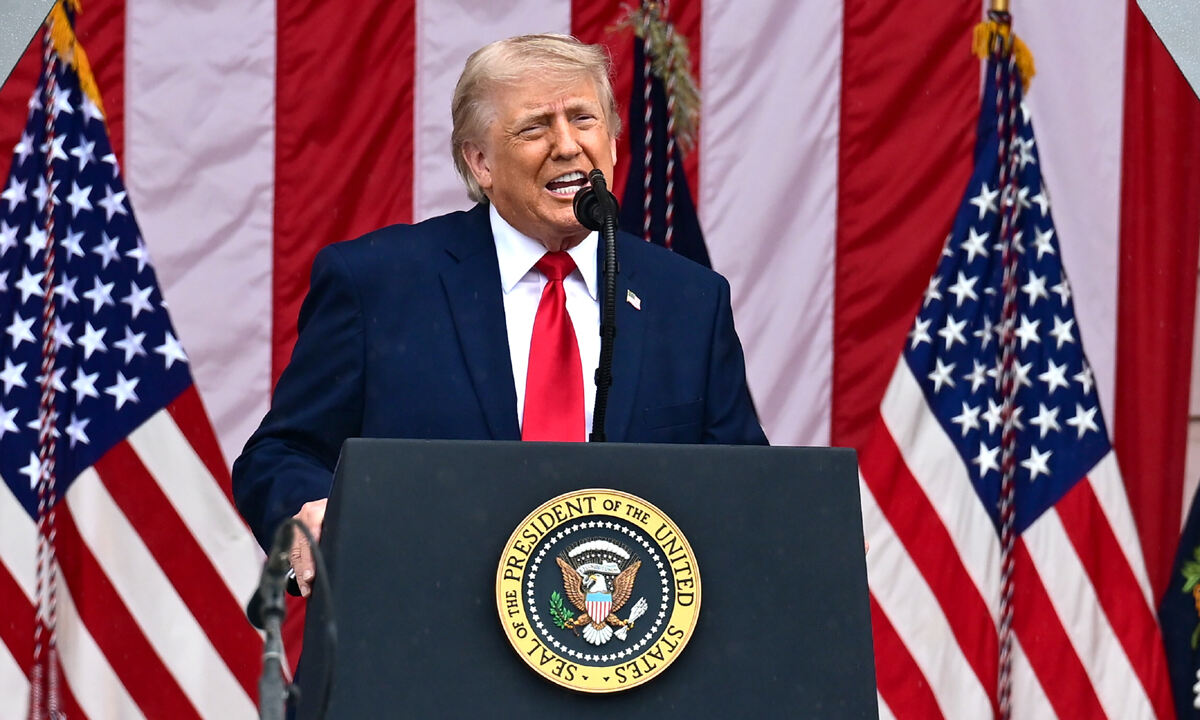
Even as the military conflict between the United States and Iran continues, they are not completely letting go of negotiations for an end-of-war agreement. U.S. President Donald Trump held a Cabinet meeting at the White House in Washington on the 27th (local time) to discuss responses to Iran and negotiation plans. Iran criticized the United States but reaffirmed its willingness to negotiate.
The day before, President Trump mentioned the meeting schedule through social networking service (SNS) TruthSocial and explained, “We originally planned to hold the meeting at Camp David, but as bad weather was expected, we changed the location to the White House.”
Camp David is a presidential retreat located in the mountains of Maryland, about 100 km from the White House in Washington. The New York Post noted the importance of this meeting, saying that President Trump has been using Camp David as a venue for high-level national security meetings since the first administration, including convening a cabinet meeting there just before the Iranian airstrike last year.
This cabinet meeting was held while negotiations to conclude a memorandum of understanding (MOU) with Iran were in crisis due to heightened military tensions. As the outline of the previous agreement was revealed and expectations and concerns about the conclusion of the negotiations were mixed, the United States attacked southern Iran the day before, saying, “It is a measure of self-defense against threats.”
Iran, which responded immediately, condemned the United States, saying, “Over the past 48 hours, the United States has seriously violated the ceasefire agreement in the Hormuz region (southern Iran),” and “again betrayed good faith and violated its promises.”
However, Iranian President Massoud Fezeshkian expressed his gratitude to Qatar’s Emir Tamim bin Hamad Al Thani, who mediated the negotiations with the United States, and said, “We are ready to establish a ‘dignified framework’ to end the war and current regional tensions.” He then urged, “Now is the time for the other side (the United States) to show its will.” This can be read as showing Iran’s willingness to negotiate.
Iranian state TV reported on this day that the draft MOU includes the resumption of passage through the Strait of Hormuz, and that if a final agreement is reached within 60 days on the nuclear issue, approval is being discussed in a binding form such as a UN Security Council resolution.
Iran appears to have entered practical steps to end the war internally. According to the Wall Street Journal (WSJ), Iranian authorities intentionally released the news of their troops’ deaths late to avoid adversely affecting the atmosphere of negotiations following the U.S. airstrike. Additionally, overseas internet networks, which had been blocked since the end of February when the war began, began to be partially restored after 87 days.
Iranian Senior Vice President Mohammad Reza Aref explained, “We have taken the first step toward free and disciplined access to the Internet space.”
The United States also appears wary of further escalation of tensions. U.S. Secretary of State Marco Rubio placed emphasis on concluding negotiations even after the U.S. military airstrike and said, “As some talks are underway in Qatar, we will see if there is any progress.” The United States is said to have urged Israel, which is continuing its airstrikes on Lebanon, to refrain from attacking the capital, Beirut. The previous day, under the direction of Prime Minister Benjamin Netanyahu, the Israeli military intensified its airstrikes against Hezbollah, leaving 31 people dead and 40 injured in southern Lebanon.
There is analysis that the positions of both sides are gradually getting closer on the nuclear issue, which is considered the biggest sticking point in the end-of-war negotiations between the United States and Iran. Recently, President Trump changed his stance to the point that he could accept a plan to dispose of Iran’s enriched uranium in a third country other than the United States. According to the New York Times, Kazakhstan’s President Kassym-Jomart Tokayev said on this day, “We are ready to support a resolution of the situation surrounding Iran’s nuclear program if an international agreement is reached,” and Kazakhstan is being mentioned as a candidate for exporting enriched uranium from Iran.
Copyright ⓒ Segye Ilbo. Unauthorized reproduction and redistribution prohibited.
Leave a Reply